
What is Chevron Packing (v packing) Seals?
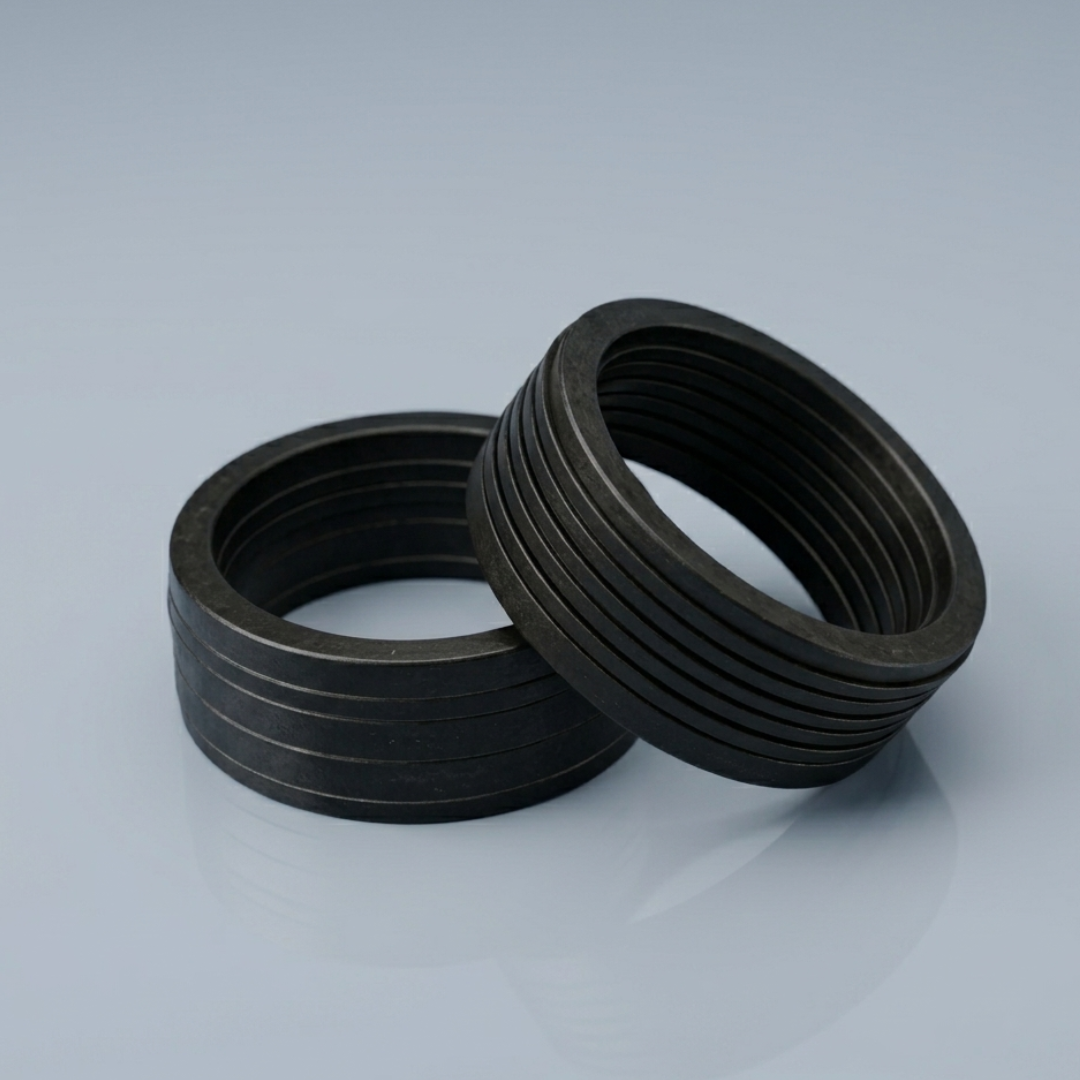
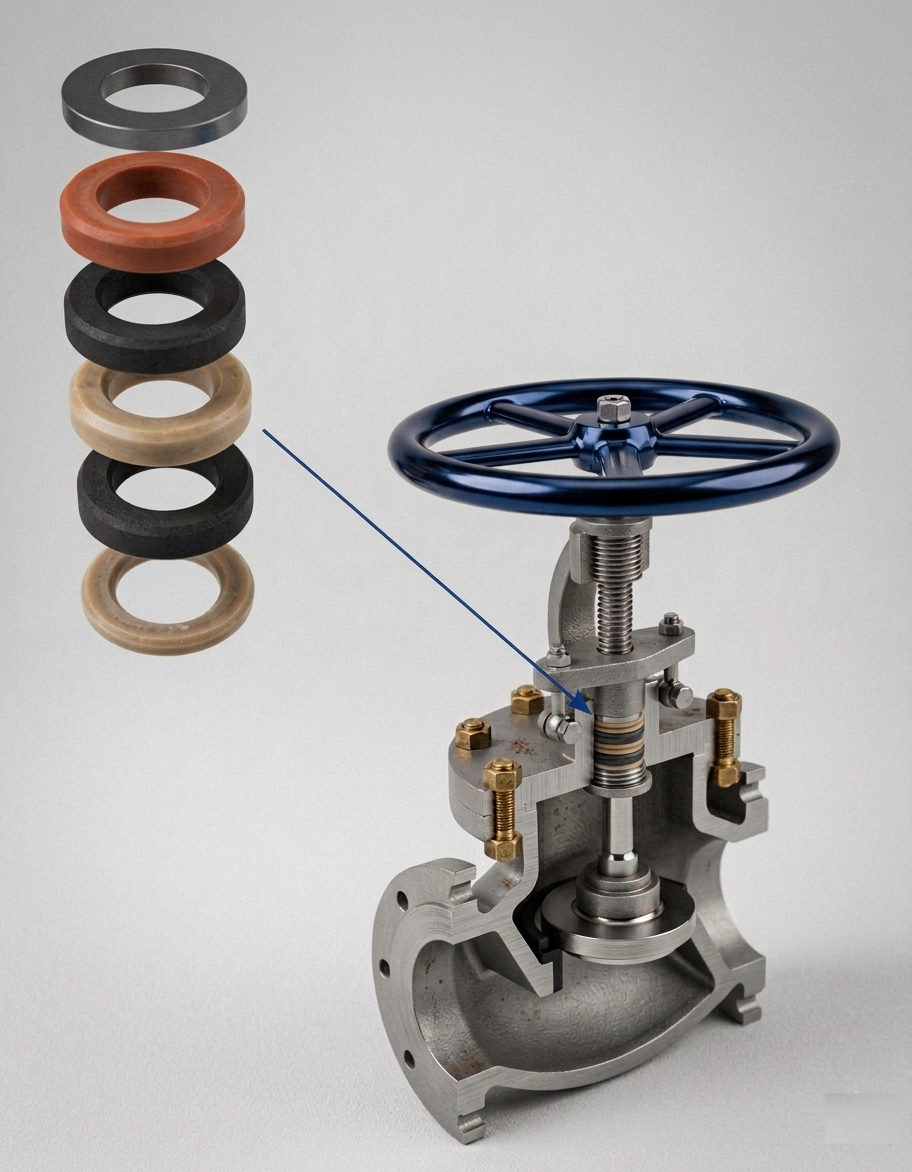
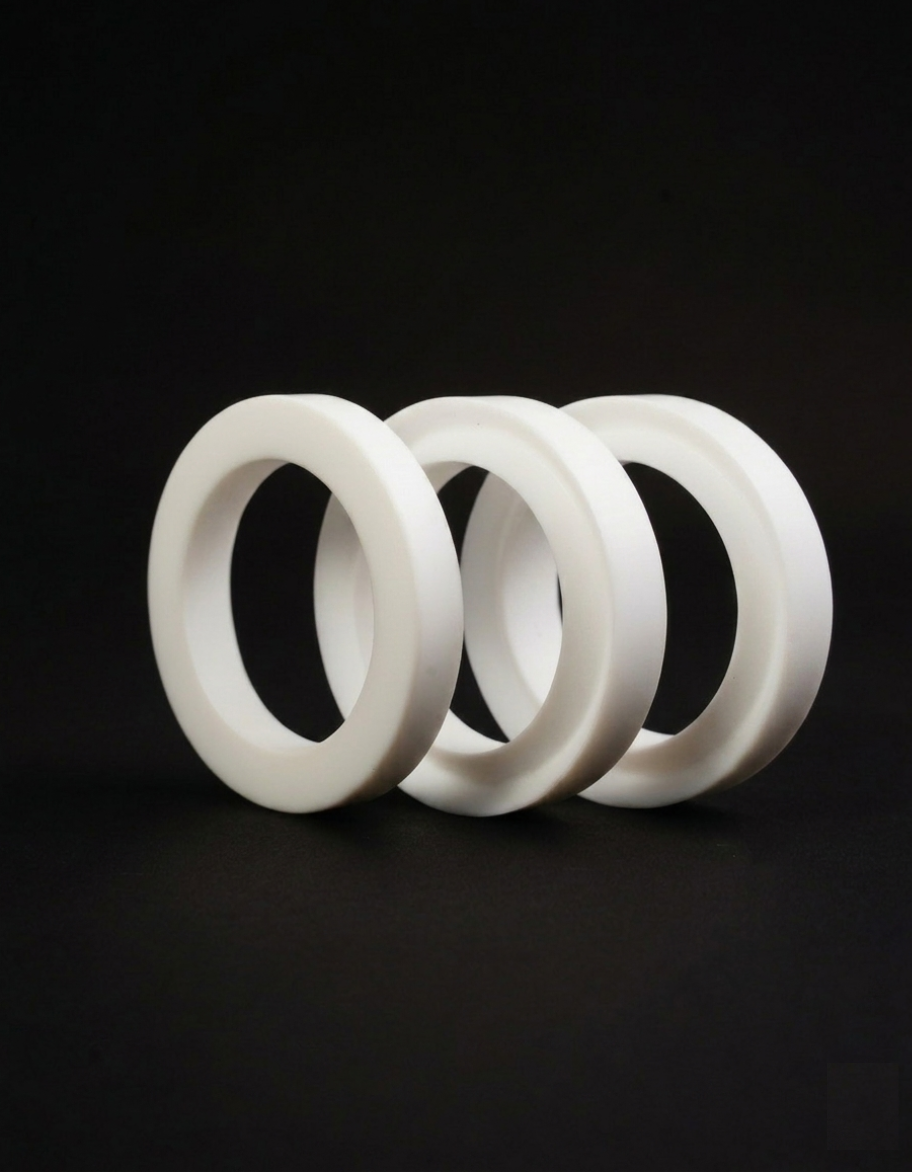
A Chevron Packing seal, also known as V‑packing, Vee packing or stem packing, is a robust multi‑lip sealing system used in high‑pressure hydraulic and pneumatic applications, especially for reciprocating pistons, rods in hydraulic cylinders, valve stems, downhole tools and oil & gas equipment to prevent fluid leakage. It consists of multiple V‑shaped rings stacked between male and female adapters. Typically made from durable elastomers such as NBR, HNBR, FKM and FFKM, along with high‑performance engineering plastics like PTFE and PEEK, these seals deliver reliable performance in demanding industries such as oil & gas, mining and heavy machinery.
Why Choose Chevron Packing Seals?
Chevron Packing seals are a preferred choice in critical high‑pressure sealing applications where safety, uptime and fluid containment are paramount. Their multi‑ring V‑design provides consistent sealing performance across a wide range of operating conditions, making them ideal for harsh environments in oil & gas, mining, petrochemical and heavy industrial operations.
These seals offer excellent chemical resistance, thermal stability and mechanical durability, especially when specified in advanced materials such as FFKM, PTFE and PEEK. Their robust construction and long service life reduce maintenance frequency and unplanned downtime, helping operators achieve reliable, low‑leakage performance in demanding equipment and downhole systems.
Basic Design Elements of Chevron Packing Seals
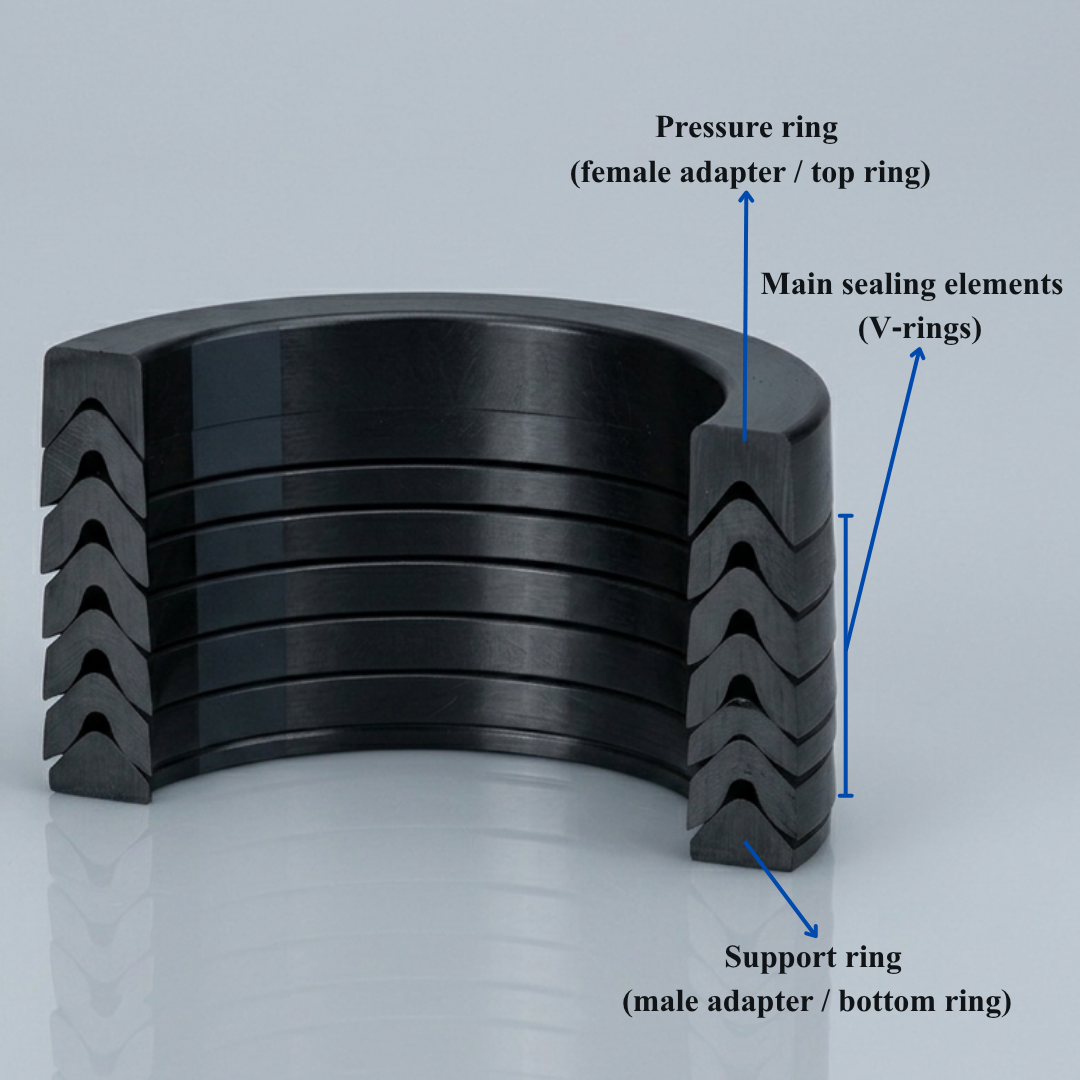
Chevron Packing seals are built around a modular, multi‑element structure that gives them high‑pressure capability and long‑term reliability. The core design consists of several distinct components working together as a single sealing set rather than a monolithic ring.
Main sealing elements – V‑rings
The heart of the assembly is a stack of V‑shaped rings (V‑rings), typically made from elastomers such as NBR, HNBR, FKM or FFKM or from high‑performance plastics like PTFE or PEEK. Each V‑ring contributes to one or more sealing lips, so the overall set forms a multi‑lip barrier that effectively contains fluid or gas along the shaft or piston.
Pressure ring (female adapter / top ring)
At the loaded end of the stack sits a pressure ring, also called a female adapter or top ring. This part helps distribute the compressive load evenly across the V‑rings, guides the stack into the gland and provides initial sealing contact before full system pressure is applied.
Support ring (male adapter / bottom ring)
At the opposite end is a support ring, often referred to as a male adapter or bottom ring. This ring anchors the assembly, maintains axial preload and helps prevent extrusion of the softer V‑rings under high pressure, especially in dynamic rod or piston applications.
Anti‑extrusion and backup elements
In many high‑pressure, high‑speed or abrasive applications, additional backup or anti‑extrusion rings are placed at one or both ends of the stack. These harder components increase resistance to extrusion into the clearance gap and protect the V‑rings, extending overall seal life.
Material and configuration options
Chevron stacks can be configured with different numbers of V‑rings and varied combinations of elastomers and engineering plastics, depending on pressure, media and temperature. This flexibility allows the basic Chevron design to be adapted reliably for demanding uses in hydraulic cylinders, downhole tools, valve stems and other oil & gas and industrial equipment.
Elastomer Materials – Chevron Packing Seals
| Trade Name | Material | Temperature Range (°C) | Features |
|---|---|---|---|
| Vertex FC | Fluoroelastomers (FKMs) | -20°C to +230°C | - Wide temperature range. - Outstanding resistance to oils, fuels and synthetic lubricants. - Superior chemical compatibility vs. standard NBR or EPDM. - Excellent compression set for dynamic sealing. |
| Vertex F | Perfluoroelastomer (FFKM) | -40°C to +315°C | - Ultimate chemical resistance beyond FKM. - Extreme temperature capability to 315°C. - Superior resistance to hydrocarbons and aromatics. - Ultra-low compression set at elevated temperatures. - Premium choice for mission-critical sealing. |
| Vertex H | HNBRs (Hydrogenated Nitrile Butadiene Rubber) | -52°C to +160° | - Outstanding oil and fuel resistance, surpassing standard NBR. - Chemically stable against acids, bases and polar solvents. - Excellent resistance to hydrocarbons, fuels and additives. - Hydrogenated for superior ozone, weather and aging resistance. - High mechanical strength with low compression set. |
Engineering Plastic Materials – Chevron Packing Seals
| Trade Name | Material | Temperature Range (°C) | Features |
|---|---|---|---|
| Novum P | Virgin PTFE | -250°C to +250°C | - Ultimate chemical resistance across aggressive acids, bases and many solvents. - Stable performance over a wide temperature range, including low‑temperature flexibility. - Extremely low coefficient of friction, ideal for dynamic and low‑torque sealing. - Naturally hydrophobic and non‑reactive, reducing contamination and media interaction. - High‑purity, unfilled structure for critical sealing applications in demanding industrial environments. |
| Novum M | Modified PTFE | -150°C to +260°C | - Retains PTFE’s outstanding chemical resistance and low coefficient of friction. - Improved mechanical strength and fatigue resistance vs. virgin PTFE. - Higher elongation and better resilience, reducing permanent deformation under load. - Enhanced weldability and processability for complex sealing profiles. - Ideal for high‑performance O‑rings, seals and Chevron‑type packs in demanding industrial applications. |
| Novum GF | Glass-Filled PTFE | -150°C to +250°C | - Reinforced Polytetrafluoroethylene (R‑PTFE) with glass‑fibre filler for higher mechanical strength and stiffness. - Improved wear resistance and lower deformation under heavy loads compared to virgin PTFE. - Maintains good chemical resistance and inertness over a broad temperature range, typically from about −150°C to +250°C. - Slightly higher coefficient of friction and not recommended for use with alkalis or hydrofluoric acid. |
| Novum CF | Carbon Filled PTFE | -200°C to +250°C | - Composite of PTFE with fine carbon particles for higher mechanical strength and stiffness. - Improved wear, abrasion and high‑friction resistance, ideal for demanding aerospace, oil & gas and industrial applications. - Better thermal conductivity than virgin PTFE, helping to dissipate heat in dynamic sealing interfaces. - Retains excellent chemical resistance and adds slight electrical conductivity for specific application needs. - API 6A‑compatible, high‑reliability sealing solution that ensures long‑term durability and safe operation in critical, high‑stress environments. |
| Novum GC | Glass and Carbon Filled PTFE | -200°C to +260°C | - Glass and carbon‑filled PTFE compound offering higher strength and wear resistance vs. virgin PTFE. - Maintains excellent chemical resistance and performs reliably across a wide temperature range, typically from about −200°C to +260°C. - Improved dimensional stability and reduced deformation under load in high‑pressure or high‑cycle sealing applications. - Widely used in oil & gas industry where long‑term leak‑free sealing and abrasion resistance are critical. |
| Novum BF | Bronze-Filled PTFE | -150°C to +250°C | - Bronze‑filled PTFE with high hardness and excellent compression strength for heavy‑load sealing applications. - Reinforced with 40–60% bronze powder, delivering superior mechanical strength and load‑bearing capability. - Good thermal and electrical conductivity, beneficial in certain tribological and grounding‑type applications. - Reduced chemical resistance vs. virgin or unfilled PTFE, limiting use in aggressive chemical environments. - Used in high‑performance seals and bearings where mechanical strength and wear resistance are prioritized over maximum chemical inertness. |
| Novum CN | Copper Nickel PTFE | -150°C to +250°C | - Copper and nickel‑filled PTFE with outstanding friction and wear properties for high‑performance sealing. - Enhanced mechanical strength and load‑bearing capability compared to unfilled PTFE. - Good thermal conductivity, helping to dissipate heat in dynamic, high‑speed sealing interfaces. - Suitable for demanding engineering plastics components, O‑rings and Chevron‑type seals in critical applications. - Widely used in oil & gas, chemical and energy sectors where durable, low‑wear sealing is essential. |
| Novum PK | PEEK | +250°C Continuous | - High‑performance PEEK engineering plastic with exceptional chemical resistance and mechanical strength. - Excellent dimensional stability under high pressure, heavy loads and continuous thermal cycling. - Retains outstanding mechanical and chemical properties at elevated temperatures, suitable for severe service. - Strong, stiff and thermally stable, ideal for precision‑machined seals, bearings and backup components. - Widely used in aerospace, oil & gas and other high‑demand industries for reliable, long‑life sealing solutions. |
| Novum PKC | PEEK Composite | +250°C Continuous | - High‑performance PEEK‑based composite reinforced with fillers such as carbon, glass or PTFE. - Enhanced creep and fatigue resistance, ideal for long‑term, high‑load sealing applications. - Improved mechanical strength and dimensional stability under extreme temperature and pressure conditions. - Tailored variants available to optimize wear, friction or chemical resistance for specific industrial needs. |
How Chevron Packing Seals Work
Chevron Packing seals use a stack of V‑shaped rings that form a dynamic, self‑tightening seal along the rod or piston. During installation, the set is compressed between a male adapter (bottom ring) and a female adapter (top ring) inside the gland, creating light contact between the V‑ring lips and the sealing surfaces. This provides a basic barrier against leakage even at low or zero pressure.
When hydraulic or pneumatic pressure is applied, it acts on the open side of the V‑rings, pushing the arms of the “V” outward toward the rod and the gland wall. This pressure assisted action increases the contact force of the lips, so the seal becomes tighter as pressure rises, instead of relying only on the initial mechanical compression. Each ring in the stack shares part of the load, with upstream rings facing higher pressure and downstream rings seeing less, which spreads the sealing force along the length and reduces stress concentration on any single ring.
The V‑shaped cross‑section also allows each ring to flex and pivot slightly at the hinge of the V. This flexibility helps the seal follow small misalignments, rod run‑out, vibration and reciprocating motion, maintaining continuous contact without cracking or tearing. Friction between the moving rod and the softer V‑rings produces heat and gradual wear, but pressure continues to push the remaining material outward, shifting the contact area and closing gaps, so leakage control is maintained over many cycles.
The male adapter anchors the stack and prevents the rings from being pushed down the gland, while the female adapter transmits the compressive load evenly and controls how much the set is compressed. Together, the adapters keep the V‑ring stack in the correct position, protect the softer rings from being squeezed into the clearance gap and help the seal deliver consistent, durable performance in high‑pressure hydraulic and pneumatic service.
Need Mission‑Critical Chevron Packing Seals for High‑Pressure, High‑Temperature Applications?
Contact ISMAT for immediate technical consultation, custom‑engineered Chevron packing seals and production‑ready PTFE‑ and PEEK‑based sealing solutions tailored to your most challenging oil & gas, downhole, hydraulic and heavy industrial requirements.
Key Advantages of ISMAT Chevron Packing Seals
➤ Engineered for high‑pressure, high‑temperature service in oil & gas, downhole tools, hydraulic cylinders and heavy industrial equipment.
➤ Multi‑lip V‑ring design that self‑energizes under system pressure, providing tight, low‑leak sealing in dynamic and reciprocating applications.
➤ Manufactured from high‑performance elastomers (NBR, HNBR, FKM, FFKM) and advanced engineering plastics (PTFE, PEEK) from the ISMAT Vertex and Novum material series
➤ Excellent resistance to wear, extrusion, chemicals and aggressive media, even in harsh and contaminated environments.
➤ Flexible V‑ring geometry that tolerates misalignment, rod run‑out and vibration while maintaining continuous sealing contact.
➤ Customizable configurations tailored to specific pressure, temperature and media requirements for each application.
➤ Modular stack design for easier inspection, adjustment and replacement of rings, helping to reduce downtime and extend service life.
➤ Backed by ISMAT’s technical expertise, precision compounding and quality control to deliver reliable, production‑ready Chevron Packing Seals for critical sealing duties.
Why Choose ISMAT for Chevron Packing Seals?
ISMAT offers Chevron Packing Seals that are specifically engineered for high‑pressure, high‑temperature and chemically aggressive environments, especially in oil & gas, downhole, hydraulic systems and heavy industrial applications. Each Chevron pack is designed with carefully selected materials that balance chemical resistance, wear performance and temperature capability for the intended service.
By optimizing groove geometry, shaft finish and clearance between the rod and housing, ISMAT minimizes the risk of extrusion, leakage and premature wear. Combined with in‑house material control and direct technical support from initial application review through to installation guidance—ISMAT ensures that every Chevron Packing Seal performs reliably and delivers long‑lasting, trouble‑free sealing in demanding operational conditions.


Trusted by Industry Leaders




Get In Touch
Contact ISMAT for Chevron Packing Seals
ISMAT engineers' precision Chevron Packing Seals with optimized V‑ring stacks and robust adapters for your most demanding HPHT applications.
Request technical consultation, download material specifications (NBR, HNBR, FKM, FFKM, PTFE, PEEK) or submit your gland and rod dimensions for custom Chevron pack design, rapid prototyping and production‑scale manufacturing that ensures maximum sealing reliability and minimal unplanned downtime.
FAQs
Chevron Packing Seals are primarily used in high‑pressure hydraulic and pneumatic applications, such as hydraulic cylinders, valve stems, reciprocating pistons and downhole tools, to prevent fluid leakage in oil & gas, mining and heavy industrial equipment.
Yes, depending on the material. Chevron packs made from FKM, FFKM, PTFE or PEEK can reliably operate under high temperatures and resist many aggressive chemicals, making them suitable for demanding oil & gas and process‑industry environments.
Chevron Packing Seals are mainly designed for moderate‑speed reciprocating motion. They are less suitable for very high‑speed or continuous rotary applications, where lower‑friction, purpose‑built rotary seals may perform better.
Chevron Packing Seals are ideal when you need a robust, pressure‑assisted, multi‑lip solution for high‑pressure, reciprocating or high‑load applications where wear, extrusion resistance and long‑term reliability are more important than the lowest possible friction or compact design.