
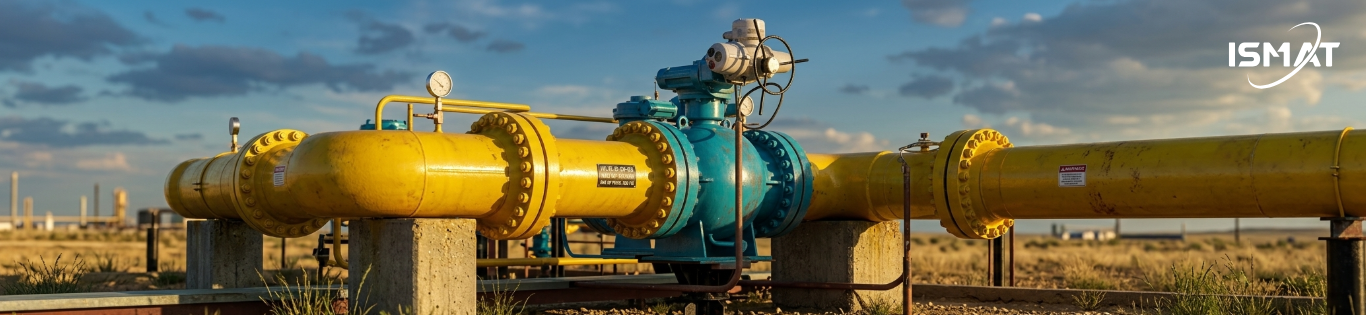
In high‑pressure valves, leakage often starts not where the main parts break, but where the sealing area is weakest. Seat rings are the critical sealing components that sit between the valve body and the moving element (ball, disc, gate or plug) and form the main contact surface that stops flow. They are engineered to stay in shape under pressure, resist squeezing or being pushed out and maintain a tight seal over time, even when exposed to high pressure, temperature changes and aggressive chemicals. In simple terms, seat rings turn the basic idea of a valve seat into a strong, reliable sealing solution for trunnion-mounted ball valves in real-world industrial service.
What Is a Seat Ring?
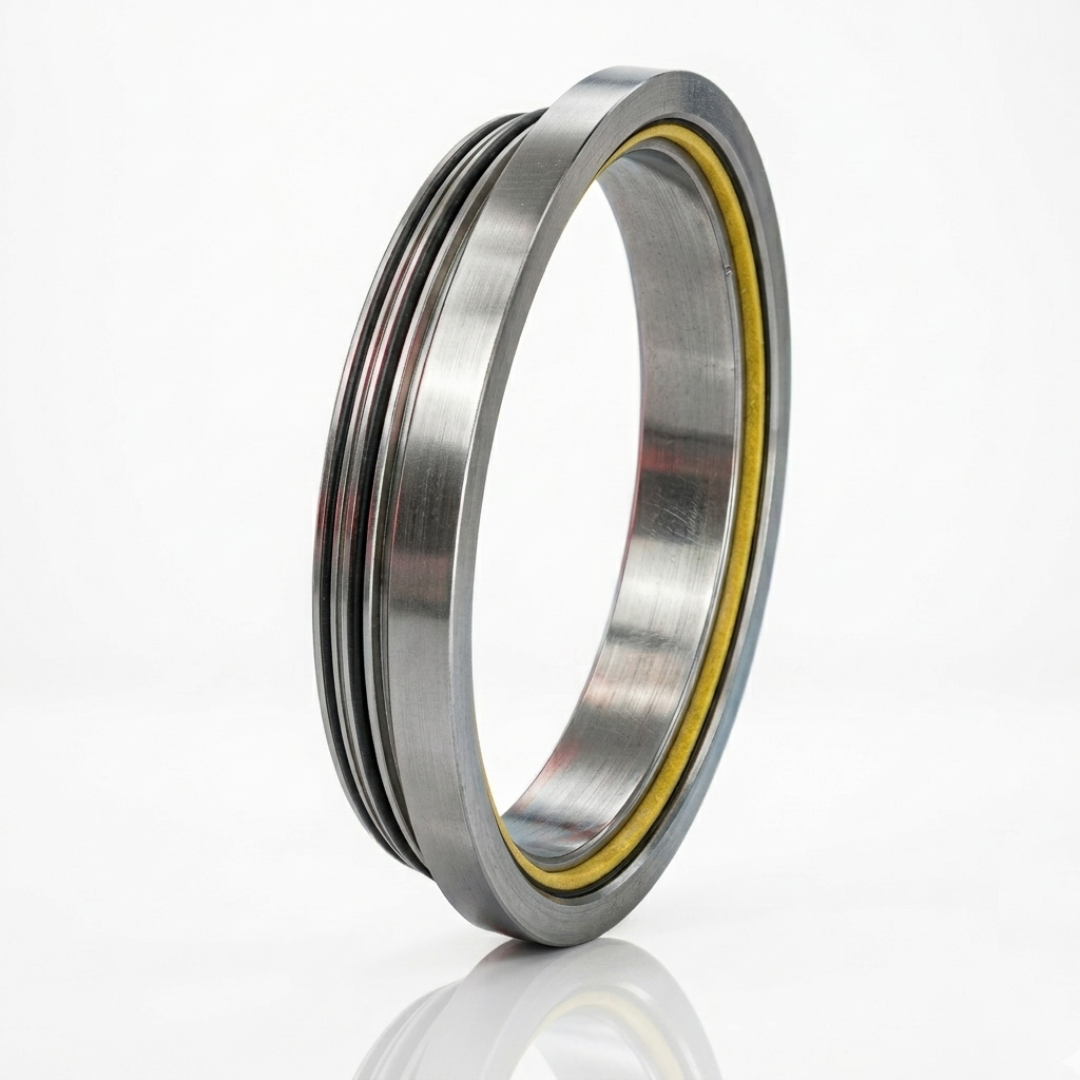
A seat ring is a ring‑shaped, replaceable sealing component that is installed into the seat cavity of a valve to form the primary sealing surface. When the valve closes, the seat ring is compressed between the valve body and the closure element, creating a controlled contact band that prevents or tightly regulates flow. The seat ring can be tailored in material, profile and support structure to suit specific media, pressure, temperature and cycle conditions. In many industrial valves, the seat ring is the engineered element that delivers tight shut‑off, predictable leakage class and stable sealing performance under real‑world operating conditions.
Why Seat Rings Are Used in Industrial Valves
Seat rings are used because they give designers and operators control over sealing performance without having to redesign the valve body for every service. By changing the seat‑ring material and geometry, a single valve platform can be adapted to different media, pressure levels and temperature ranges. Seat rings also make maintenance easier, as they are often the only part that needs to be replaced when wear or degradation occurs. This reduces downtime and lifecycle cost, especially in high‑pressure, high‑cycle or chemically aggressive services. In many valve types, seat rings are the practical way to implement a soft‑seat or polymer‑based seal that provides low‑leak performance where metal‑to‑metal seats alone would not be enough.
Basic Design Elements of Seat Rings
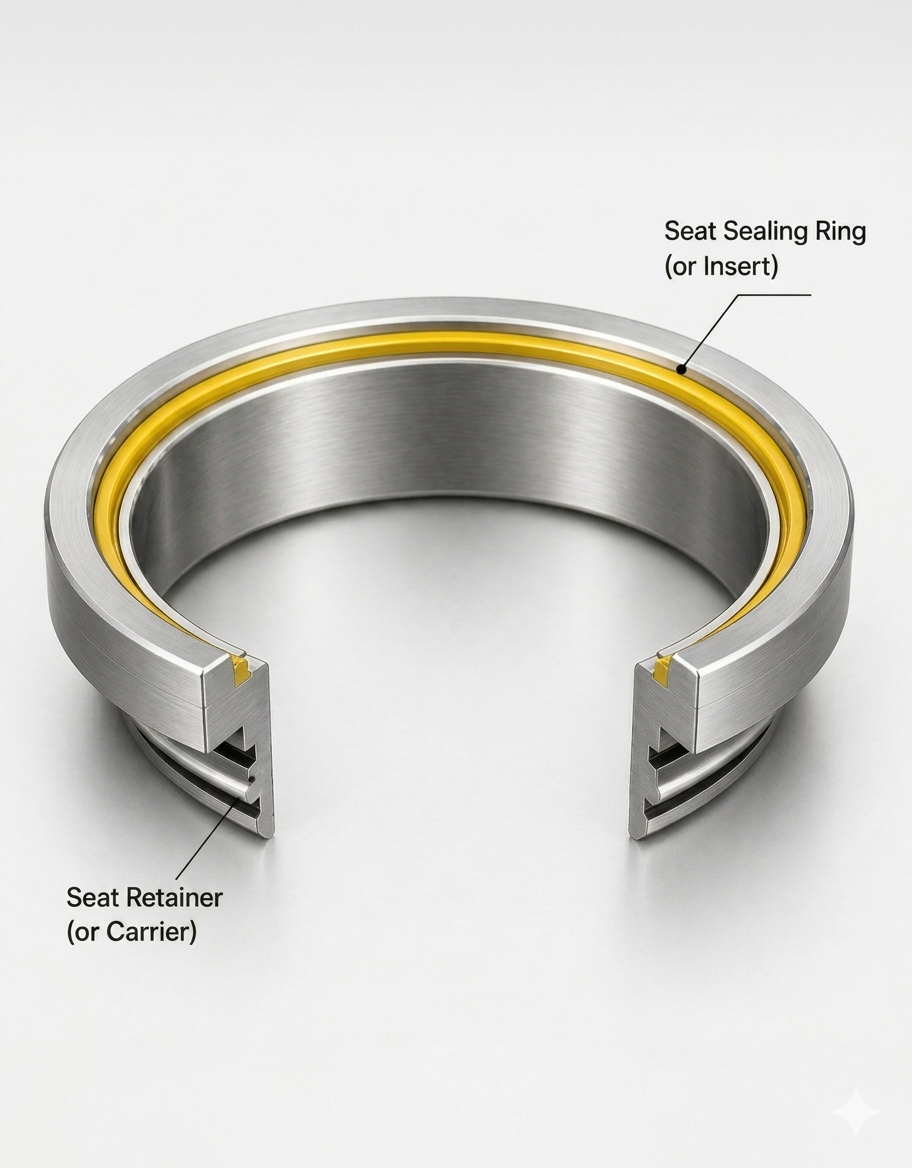
A seat ring is not a standalone component but part of a multi-part assembly. Its mechanical performance relies on two distinct elements working in harmony: the Seat Sealing Ring (or Insert) and the Seat Retainer (or Carrier).
Seat Sealing Ring (or Insert)
This component serves as the direct contact interface with the closure element. Beyond providing the initial bubble-tight seal, this insert is often engineered with specific geometric features to facilitate automatic pressure relief. In many high-pressure designs, this soft sealing element is backed by secondary components such as an elastomer O-ring to ensure sustained contact with the ball, creating a robust Primary Metal, Secondary Soft (PMSS) sealing configuration.
Seat Retainer (or Carrier)
The retainer is the structural backbone of the seat assembly. Its primary function is to house the sealing insert and maintain its precise alignment against the closure element. Built to withstand significant operational pressures and temperature fluctuations, this mechanical component prevents the sealing insert from shifting or rotating under load. By ensuring that the insert remains correctly positioned in the seat cavity, the retainer prevents uneven wear and guarantees the structural integrity of the seal across the valve’s entire range of motion.
The synergy between these two elements defines the reliability of the valve seat.
Seat Sealing Ring (or Insert) Material Specifications
Seat Sealing Rings (or Inserts) are engineered sealing elements that deliver tight shut-off, resist deformation and extrusion and withstand the combined effects of pressure, temperature, chemical exposure and mechanical wear properties that hinge on optimal material selection. ISMAT provides these rings in a range of high-performance polymers and engineered-plastic families, including virgin PTFE, modified PTFE, carbon-filled PTFE, glass-filled PTFE, PEEK-based grades, PEEK-PTFE-carbon-graphite composites and thermoplastic composite variants, ensuring a technically matched solution for every valve type and service condition.
| Trade Name | Material type / Grade | Typical temp range (°C) | Key properties | Certifications |
|---|---|---|---|---|
| Novum P | Virgin PTFE | -250°C to +250°C | Excellent chemical resistance, very low friction, good electrical insulation | API 6A |
| Novum M | RPTFE / modified PTFE | -150°C to +260°C | Improved creep resistance, better wear and load‑bearing vs virgin PTFE | API 6A |
| Novum CF | Carbon‑filled PTFE | -200°C to +250°C | High compressive strength, good wear and sliding performance | API 6A |
| Novum GF | Glass‑filled PTFE | -150°C to +250°C | Low deformation under load, good dimensional stability | API 6A |
| Novum PK | PEEK | Continuous Service Temperature of +250°C | High strength, excellent chemical and thermal resistance | |
| Novum PKC | PEEK Composite | Continuous Service Temperature of +250°C | Higher tensile strength and shear resistance vs virgin PEEK, good creep and fatigue resistance | |
| Novum PCT | PCTFE | -200°C to +150°C | Higher strength and lower creep vs virgin PTFE, with excellent chemical resistance, low permeability | |
| Devlon | –40 to +150 (approx.) | Tough, wear‑resistant, good dimensional stability, low creep under load |
Seat Retainer (or Carrier) Material Specifications
Seat Retainers (or Carriers) at ISMAT are engineered for superior structural integrity, precise load distribution and resistance to high-pressure deformation, perfectly matched to demanding industrial services within API-6D and ASME-rated valve platforms. For ISMAT seat-retainer solutions, primary materials include high-strength stainless steels (SS316, SS316L, SS302/SS304/SS304L), Inconel and Hastelloy, accommodating a broad spectrum of nominal sizes and pressure classes in oil & gas, petrochemical and general industrial applications.
| Specification (ISMAT) | |
|---|---|
| Seat retainer material | Stainless steels (SS316, SS316L, SS302/SS304/SS304L), Inconel and Hastelloy |
| Typical valve sizes | 2 inches to 36 inches (DN50 to DN900) |
| ASME pressure classes | Class 150, 300, 600, 900, 1500, 2500 |
| Design standard | API 6D (Pipeline valves) |
This blend of robust metallic materials, extensive size range and ASME/API-6D compliance enables ISMAT Seat Retainers (or Carriers) to excel in critical-service trunnion-mounted ball valves across high-pressure oil & gas and industrial systems.
Need High‑Performance Seat Rings for Challenging Pressure, Temperature and Media Conditions?
Partner with ISMAT to design seat rings with tailored PTFE, PEEK and composite materials for low‑leak, wear‑resistant and dimensionally stable sealing in critical industrial valves.
How Seat Rings Work in a Trunnion‑Mounted Ball Valve
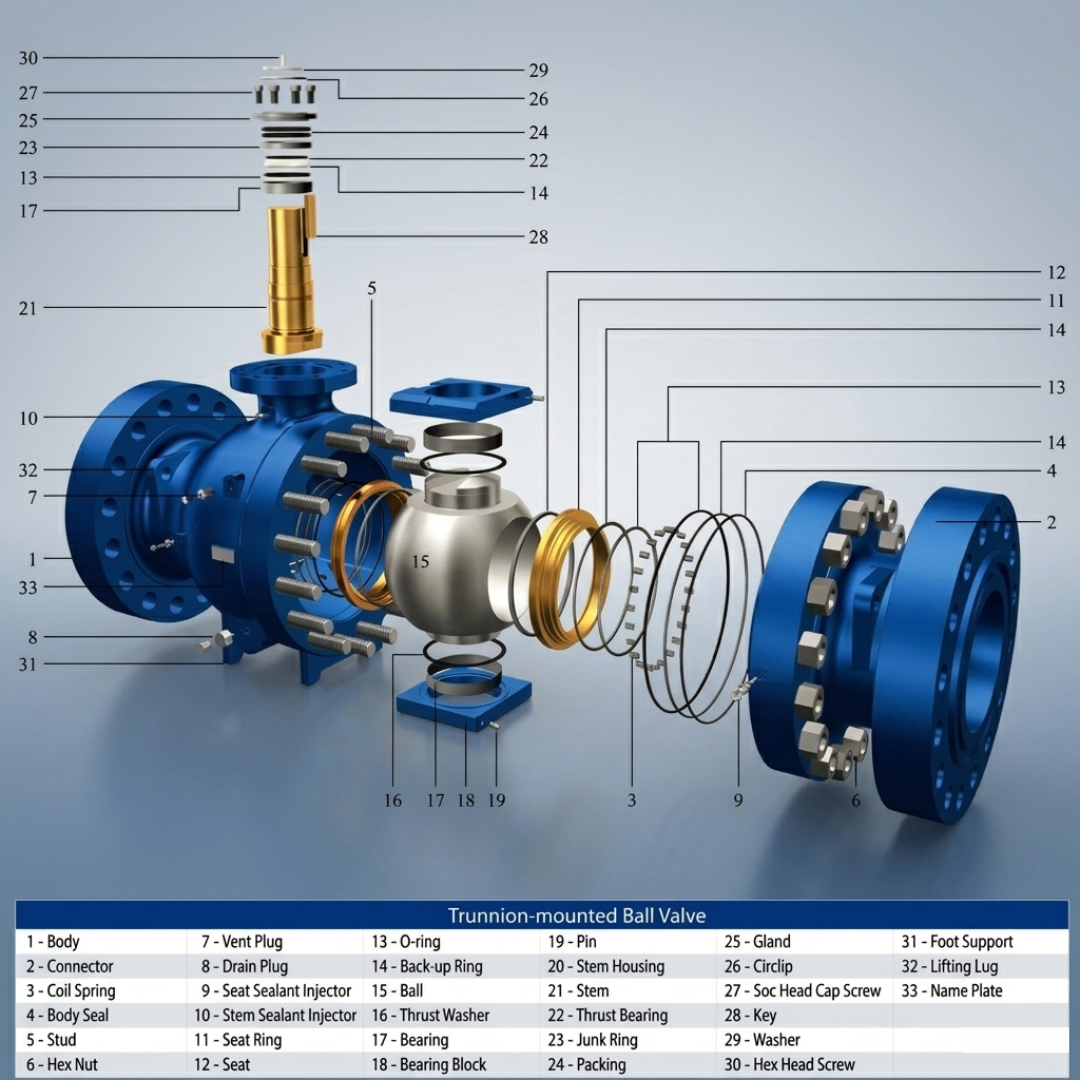
➤ In a trunnion‑mounted ball valve, seat rings create the primary sealing interface between the fixed ball and the valve body.
➤ The ball is mechanically supported by the trunnion and does not float, so sealing depends on pre‑loaded or spring‑loaded seat rings pressing tightly against the ball.
➤ Under low or no pressure, the seat rings maintain contact through mechanical preload, ensuring tight shut‑off even when line pressure is low.
➤ As pressure increases, fluid in the cavity pushes the seat to ring harder against the ball, improving contact pressure and sealing performance.
➤ Many TMBVs use upstream and downstream seat rings so that at least one side remains sealed even if the other side is damaged or experiences higher cavity pressure.
➤ Seat rings are typically made from PTFE‑based, PEEK‑based or metal‑faced materials, chosen to resist deformation, extrusion and wear under cyclic operation.
➤ They must maintain a stable contact band against the polished ball surface to deliver reliable, low‑leak sealing across the full operating range of the trunnion‑mounted ball valve.
How Seat Rings Improve Valve Performance
From an engineering standpoint, seat rings bring several practical benefits to valve performance. They allow tighter sealing in many services, especially where polymer‑based materials can achieve lower leakage levels than metal‑to‑metal seats. They also tolerate small misalignments, surface imperfections and thermal dimensional changes. Seat rings give OEMs and end‑users the flexibility to change the valve’s sealing behavior without changing the body, simply by selecting a different seat‑ring material. In many services, polymer‑based seat rings reduce friction and eliminate galling between the ball and seat, especially in frequent‑cycling applications. When wear or damage occurs, the seat ring can usually be replaced or upgraded, allowing existing valves to be modernized without full replacement. Overall, seat rings translate the simple concept of a valve seat into a practical, application‑specific sealing solution that improves reliability, service life and maintenance efficiency.
Industries and Typical Applications for Seat Rings
Seat rings support sealing in industries where controlled leakage, reliability and service life matter.
➤ In oil & gas service, trunnion‑mounted ball valves and gate valves often use carbon‑filled PTFE or PEEK‑based seat rings for sour‑gas, LNG and high‑pressure lines.
➤ In chemical and petrochemical plants, PTFE‑ or PEEK‑based seat rings are selected to match the specific process media, providing tight shut‑off in corrosive‑service lines.
➤ In power generation, steam and feed‑water valves rely on PEEK‑ or glass‑filled‑PTFE seat rings that withstand high‑temperature water and steam.
➤ In general‑purpose industrial valves, water, air and mild‑chemical service ball and gate valves commonly use standard PTFE or elastomer‑based seat rings.
Across these industries, the seat ring is the part that adapts the valve’s sealing behavior to the actual operating conditions.
Why Choose ISMAT for Seat Rings
ISMAT designs and manufactures high‑performance seat rings using advanced PTFE‑based, PEEK‑based and composite materials that are engineered specifically for pressure, temperature and media in critical industrial valves. Our in‑house compounding and material expertise allow us to tailor seat‑ring properties for demanding services such as sour‑gas, high‑temperature steam and corrosive or abrasive process lines.
With application‑driven design and extensive in‑house tooling, ISMAT can produce custom‑size seat rings for OEM‑specific valve platforms and retrofit programs, including ball, gate, butterfly and control valves. This combination of material know‑how, precision engineering and fast customization ensures reliable, low‑leak sealing and extended service life, making ISMAT a trusted partner for high‑integrity valve‑seating solutions.
Trusted by Industry Leaders




Get In Touch
Contact ISMAT for Seat Rings
For valve systems where sealing performance cannot be compromised, choose seat rings engineered for tight shut‑off, pressure resistance and long‑term reliability.
Contact ISMAT for application‑specific seat ring solutions designed to support your most demanding operating conditions, from high‑pressure TMBVs to corrosive and high‑temperature industrial services.
FAQs
A seat ring is a ring‑shaped, replaceable sealing component installed into the seat cavity of a valve to form the primary sealing surface. The valve seat is the general concept of that sealing surface, which can be integral in the body or realized as a separate seat ring.
Seat rings are used in ball valves to provide tight shut‑off between the valve body and the closure element under pressure, temperature and chemical exposure.
Common seat‑ring materials include virgin PTFE, modified PTFE (RPTFE), carbon‑filled and glass‑filled PTFE, PEEK‑based grades, PEEK‑PTFE‑carbon‑graphite composites and metallic alloys such as stainless steel and Elgiloy, depending on service conditions.
In high‑pressure service, seat rings rely on correct pre‑compression, support features and backup rings to resist deformation and extrusion. Polymer‑based seat rings are often spring‑energized or “live‑loaded” to maintain contact and low‑leak performance even under extreme pressure and temperature.