
A bonded seal is a small component – but inside a downhole tool, it carries a critical job. It acts as a pressure barrier, keeping the tool’s internal systems separated from the harsh wellbore environment. It keeps abrasive drilling mud out of lubricated bearing chambers, protects sensitive electronics from wellbore fluids and prevents formation pressure from entering the tool’s hydraulic circuits.
These seals work thousands of metres underground, where temperatures exceed 150°C and pressures go beyond 15,000 PSI. Once the tool is deployed, there is no way to inspect or replace the seal until it is pulled back to surface. If the seal holds, the tool runs. If it fails, the tool fails – triggering a costly recovery operation and lost drilling time that far outweighs the cost of the seal itself. That is the standard every bonded seal we produce is built to meet.
What Is a Bonded Seal?
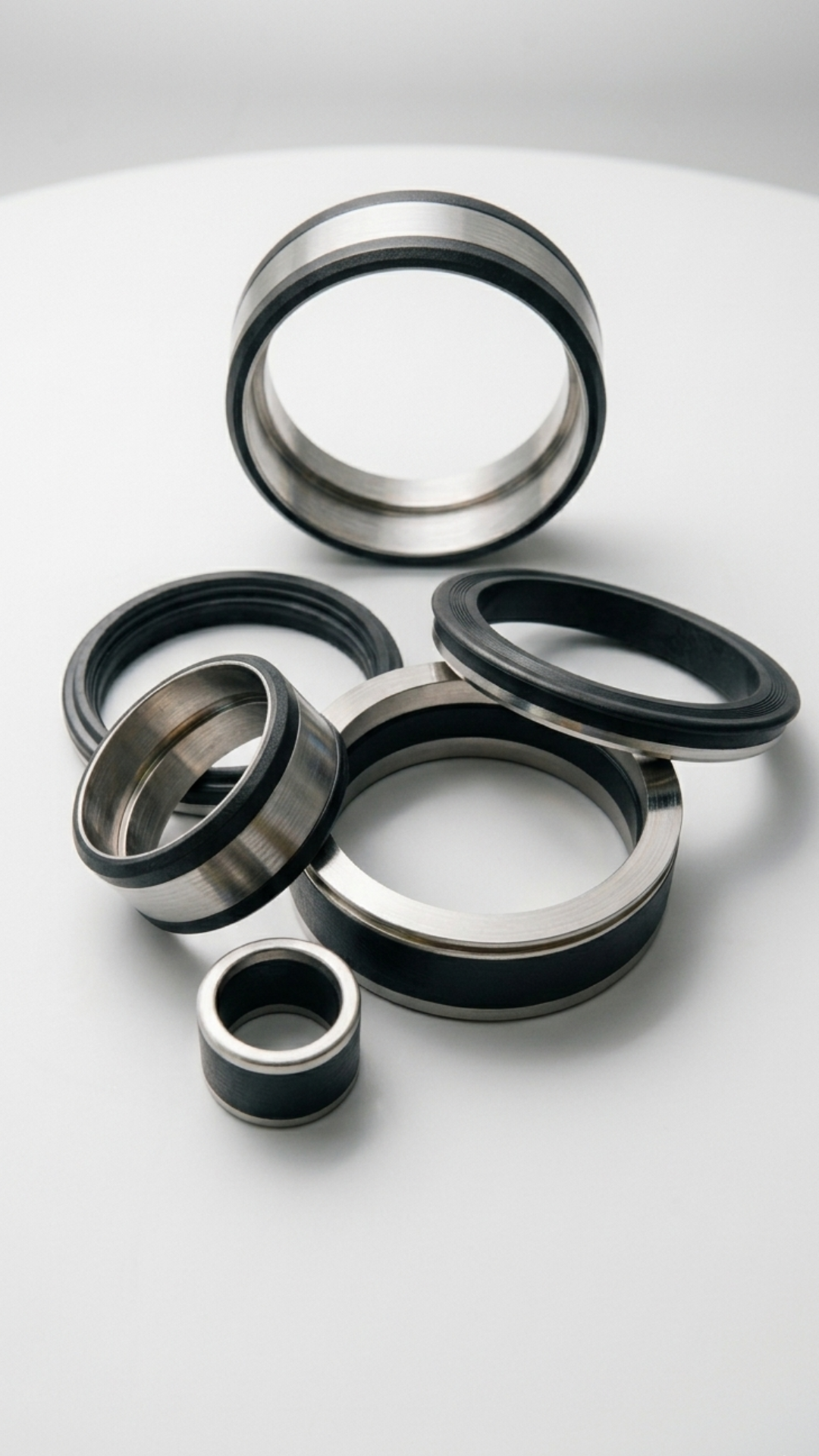
A bonded seal is a precision machined metal ring with a high-performance elastomer permanently moulded and chemically bonded onto it – forming a single, inseparable assembly. The metal provides structural strength, dimensional stability and resistance to the burst forces generated at high differential pressure. The elastomer is shaped to a specific sealing geometry, compressed against the mating surface at assembly and designed to recover and maintain contact as pressure and temperature cycle through the operating range.
In oil and gas applications, bonded seals are manufactured to tight dimensional tolerances and specified to the exact elastomer compound, compression allowance and substrate material required for the well environment – whether that means resistance to hydrogen sulphide, compatibility with oil-based mud or retention of sealing performance at elevated downhole temperatures.
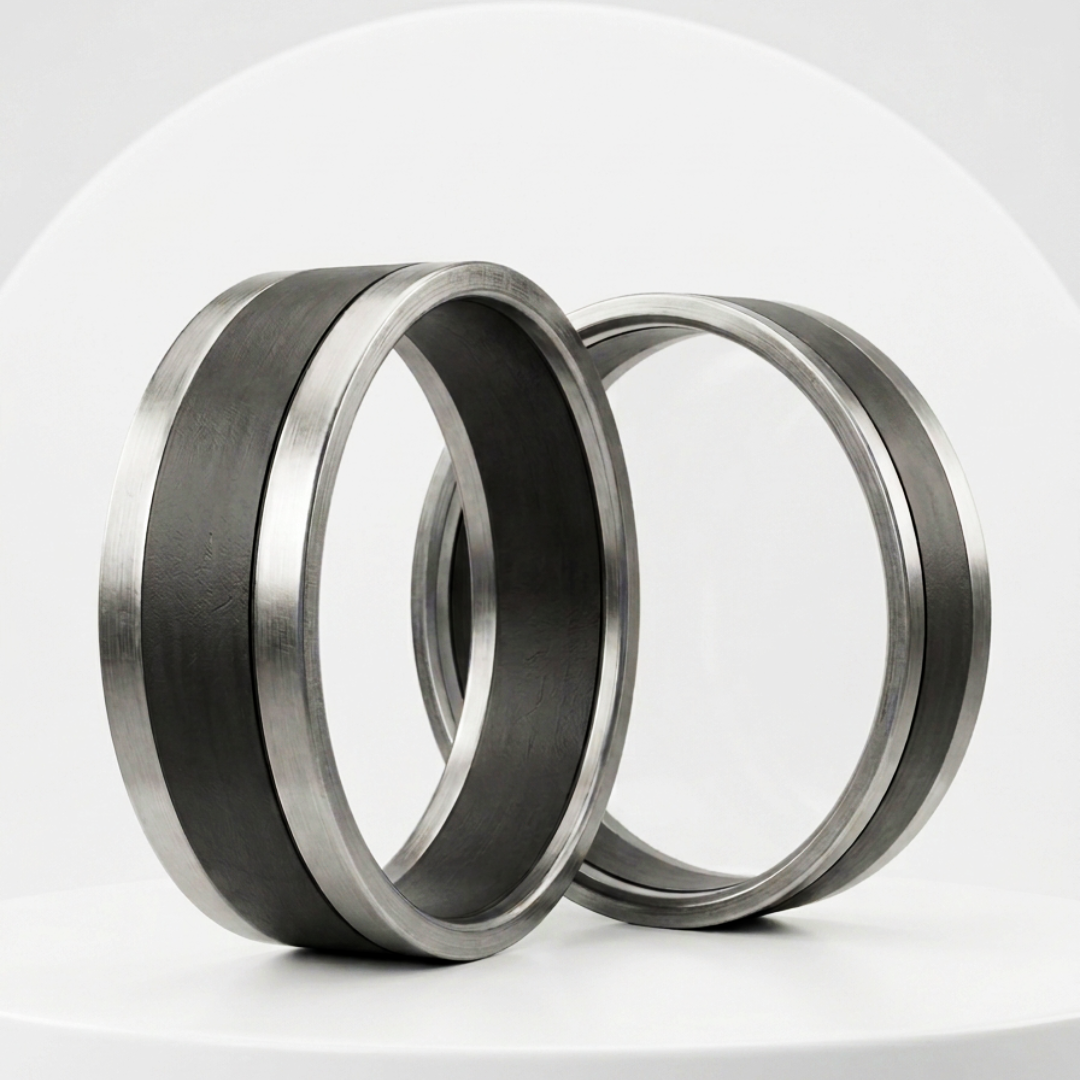
Bonded Seals Material Specifications for oil and gas
Material selection is the most important decision in bonded seal specification. The wrong elastomer in contact with the process fluid will swell, harden, crack or chemically degrade – all of which result in loss of sealing force and eventual leakage. The wrong metal ring material in a corrosive environment will corrode, losing its structural integrity and dimensional accuracy. The guidance below covers the standard material options and the service conditions each is suited to.
Elastomeric Materials
The elastomeric material is selected primarily on the basis of chemical compatibility with the process fluid and the operating temperature range of the application.
| Trade Name | Material type / Grade | Temperature Range | Suitable For |
|---|---|---|---|
| Vertex H | Hydrogenated Nitrile Butadiene Rubber (HNBR) | -52°C to +160° | The right choice for most downhole applications. Handles water-based and oil-based mud, tolerates moderate H2S and covers the majority of HPHT tool requirements. |
| Vertex FC | Fluoroelastomer (Viton) | -20°C to +230°C | When HNBR runs out of temperature headroom. Well suited to oil-based mud programmes and moderate H2S service up to 200°C. |
| Vertex A | Tetrafluoroethylene propylene (FEPM / Aflas®) | -3°C to +230°C | When H2S, steam and amines appear together - conditions that rule FKM out. Also the compound of choice for geothermal wells and high-pH completion fluids. |
| Vertex F | Perfluoroelastomer (FFKM) | -40°C to +315°C | The highest performing compound available - maximum temperature and chemical resistance in the same material. Reserved for ultra-HPHT conditions where every other option has been genuinely ruled out. |
Metal Ring Materials
The metal ring material is selected primarily based on corrosion resistance requirements in the service environment.
| Metal | Application |
|---|---|
| Stainless Steel 302 | Light corrosive service. Common in surface equipment and instrumentation in mild environments. |
| Stainless Steel 304 | General hydraulic and surface wellhead service where moderate corrosion resistance is sufficient. |
| Stainless Steel 309L | High-temperature oxidising environments where thermal cycling and oxidation resistance take priority. |
| Stainless Steel 316 | The baseline for offshore and subsea applications handles chloride-bearing fluids, seawater and moderately aggressive drilling environments. |
| Stainless Steel 316L | Low-carbon variant of SS316. Preferred where welded assemblies are exposed to corrosive media in offshore and chemical service. |
| Inconel | HPHT downhole service, sour wells with elevated H2S & CO2 and high-pressure gas applications where stainless steel grades are insufficient. |
| Hastelloy | The most aggressive environments - concentrated acids, high-chloride formation fluids and severe sour service conditions that exceed Inconel's reliable operating range. |
Need Bonded Seals Engineered for Downhole Service?
Partner with ISMAT to source bonded seals built for the pressures, temperatures and fluid environments that downhole tools actually operate in – with elastomers in HNBR, FKM, AFLAS and FFKM and metal substrates in stainless steel, Inconel and Hastelloy, specified to your tool interface and well conditions.
Where Bonded Seals Are Used
Bonded seals are not confined to one part of the drill string. They show up wherever a downhole tool needs to keep fluids separated under pressure – and in drilling, that is more places than most people realise.
Mud Motor – Bearing Section: The bearings inside a mud motor run in clean oil. Bonded seals keep that oil in and abrasive drilling mud out. When the seal fails, mud enters, wear accelerates and the motor has to be pulled from the hole early.
Measurement While Drilling and Logging While Drilling (MWD and LWD) Tools: The sensors and electronics inside these tools must stay completely isolated from wellbore fluid. If the seal fails, fluid reaches the electronics and the tool fails instantly – the string comes out, the tool is replaced and the run is lost.
Rotary Steerable Systems: RSS tools steer the wellbore using internal hydraulic actuators. The seals here must maintain isolation while the tool is simultaneously rotating, bending and transmitting load – making this one of the more demanding seal applications in the drill string.
Drill Bit Bearing Assemblies: Sealed bearings in roller-cone bits rely on bonded face seals to stay separated from drilling mud and cuttings. These seals sit at the very bottom of the drill string – the most aggressive environment in the hole.
Shock Tools and Hydraulic Jars: Shock tools and jars spend their working life absorbing and releasing energy – thousands of high-impact cycles over a single run. The seals inside have to survive every one of those hits without the bond between the rubber and metal giving way.
Stabilisers – Rotating Blade Sections: Stabiliser bearing sections are grease-lubricated and need protection from wellbore pressure and abrasive mud. It is a less severe environment than some of the others on this list, but the seals still have to last the full run.
Why Standard Bonded Seals Fail Downhole
Standard bonded seals are well-made components, but they are designed for surface hydraulic applications. When they are used inside downhole tools, the conditions they encounter are in a different category entirely. Here is what goes wrong and why.
Temperature Degradation
Standard NBR rubber has a working temperature limit of around 100 to 120°C. Downhole temperatures regularly go beyond 150°C and in high-pressure high-temperature wells, 200°C is not unusual. Push NBR past its limit and it hardens, loses its elasticity and stops generating the contact pressure needed to seal. The seal is still physically there – it just is not doing its job anymore. This kind of failure often only comes to light when the tool is stripped down after it comes back to the surface.
Bond Failure in Oil-Based Mud
Oil-based drilling mud contains hydrocarbon solvents that slowly work their way into the adhesive layer between the rubber and the metal ring. Over time, that bond weakens. Add in the temperature cycling and vibration that a downhole tool goes through on a typical run and the process accelerates. Eventually the rubber separates from the metal – and a loose piece of rubber inside a precision tool causes damage well beyond just the seal location. This is a well-documented failure mode in mud motor bearing sections.
Rapid Gas Decompression
Under sustained wellbore pressure, gases like methane, carbon dioxide and hydrogen sulphide dissolve into the rubber. When pressure drops quickly — during a shut-in or tripping out of the hole — those gases try to escape faster than the rubber can release them. The result is blistering, cracking or fragmentation from the inside out. The outside of the seal can look completely normal while the internal structure is already destroyed. Standard surface-service elastomers are not built or tested with this in mind.
Vibration-Induced Bond Fatigue
Measurement while drilling and logging while drilling tools can experience shock loads of 200 to 500 times the force of gravity in high-vibration drilling environments. Every impact puts stress on the bond between the rubber and the metal. That stress accumulates at the edges of the bond first and works its way inward over the course of a run. Standard bond systems are not designed to take up this kind of repeated loading.
Dimensional Mismatch
Standard bonded seals are manufactured to catalogue dimensions — DIN, BSP or metric thread standards. Downhole tool interfaces are machined to the OEM’s own specific dimensions. The closest catalogue size is rarely the right fit. Too much compression and the seal extrudes and fatigues early. Too little and it never generates enough contact pressure to hold in the first place. Either way, the seal is compromised before the tool even reaches depth.
Why Choose ISMAT for Bonded Seals?
Not all bonded seals are built to the same standard. The difference between a well-manufactured seal and a poor one is rarely visible from the outside – it shows downhole, in bond failures, dimensional inconsistency and premature leakage inside a tool that cannot be accessed until it surfaces. By that point, the cost is already significant.
Dimensional Accuracy That Holds in Production: A seal that compresses correctly in a sample batch but drifts in production is not a reliable component. We maintain dimensional accuracy across every batch – not just at the qualification stage – so the compression ratio and sealing contact stress at your tool interface remain consistent from the first order to the hundredth.
Bond Integrity Built for Downhole Conditions: The bond between rubber and metal is where most downhole seal failures begin. Our in-house vulcanisation process, surface preparation standards and primer systems are validated through adhesion testing, heat ageing and chemical immersion specifically for the thermal cycling, vibration fatigue and oil-based mud exposure that standard bond systems are not designed to withstand.
Elastomers Qualified Before They Enter Production: Every compound we use is tested to ASTM D2000 or equivalent before it goes into a production seal – confirming hardness, compression set, tensile strength and chemical resistance. Downhole is not the place to find out a compound does not meet specifications.
Traceability and Compliance: Material test reports, certificates of conformity and full batch traceability are standard on every order. ISMAT holds ISO 9001:2015 and IATF 16949 certifications and supports API 6A and NORSOK M-710 compliance requirements for oil and gas applications.
Manufactured to Your Tool Interface: Where catalogue sizes do not fit, we manufacture your drawings – in non-standard dimensions, custom elastomer and substrate combinations and bespoke ring profiles matched to your tool geometry. We also supply bonded seal kits in specified sizes and compounds for field service and maintenance programmes.
Trusted by Industry Leaders




Get In Touch
Talk to ISMAT About Your Downhole Seal Requirements
If you are specifying bonded seals for downhole tools - whether for a new tool design, an existing interface with a seal reliability issue or a field service programme - talk to our engineering team.
We work from your tool drawing, your well conditions and your operating environment to produce seals that are built for the application, not selected from a catalogue.
FAQs
A standard bonded seal is made to thread standard dimensions using general-purpose rubber — it is designed for surface hydraulic service. A downhole bonded seal is made to your tool drawing, with an elastomer and bond system chosen specifically for your well temperature and fluid chemistry. Same basic construction, completely different engineering.
Start with HNBR for most applications below 165°C. Move to FKM if temperature goes higher. Use AFLAS where hydrogen sulphide, steam and amines appear together – conditions that rule FKM out. Reserve FFKM for the most extreme wells where everything else has been genuinely eliminated. The cost is significant and only justified when the well demands it.
Through peel and lap shear testing on specimens from each production batch. For high-pressure high-temperature service, specimens are immersion-aged in the target downhole fluid at rated temperature and re-tested before the batch is released.
Gases dissolved in the elastomer under wellbore pressure expand rapidly when pressure drops suddenly during tripping or shut-in causing internal blistering or fracture. Prevention means specifying a compound qualified to NORSOK M-710 for rapid gas decompression resistance, not just one rated for the right temperature.