
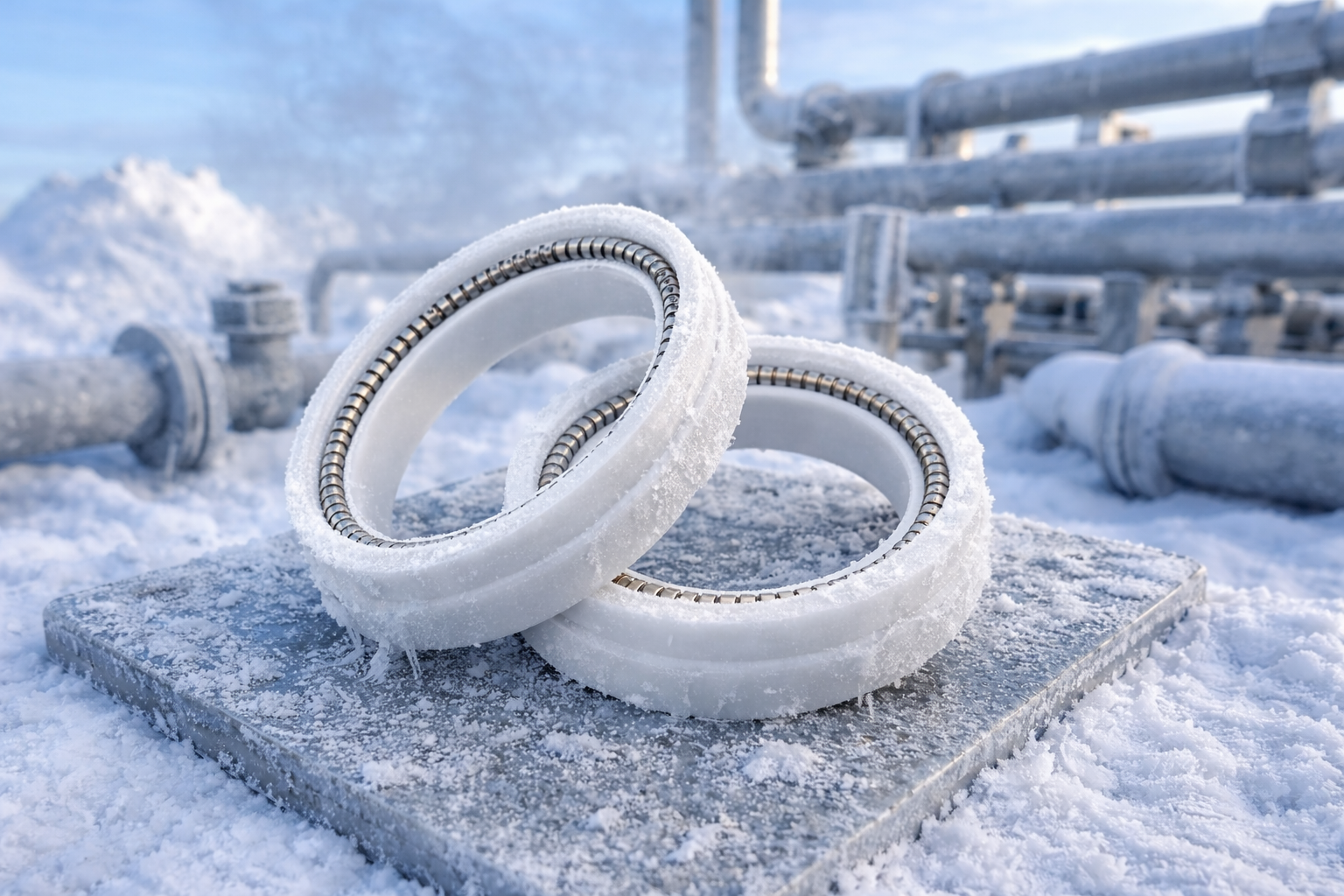
What are Spring-Energized Seals?
Spring-energized seals are advanced sealing solutions that outperform traditional elastomeric seals, which often fail due to chemical degradation, frictional wear or thermal extremes. They feature a high-performance sealing material integrated with a metallic spring mechanism that applies consistent, adaptive pressure to maintain uninterrupted surface contact. This compensates dynamically for wear and environmental shifts, delivering low-friction operations across broad temperature ranges. Offered in O-ring, lip seal and custom profiles, they provide superior leak prevention and long-term reliability in hydraulic, pneumatic and rotary applications – ideal for demanding heavy industries.
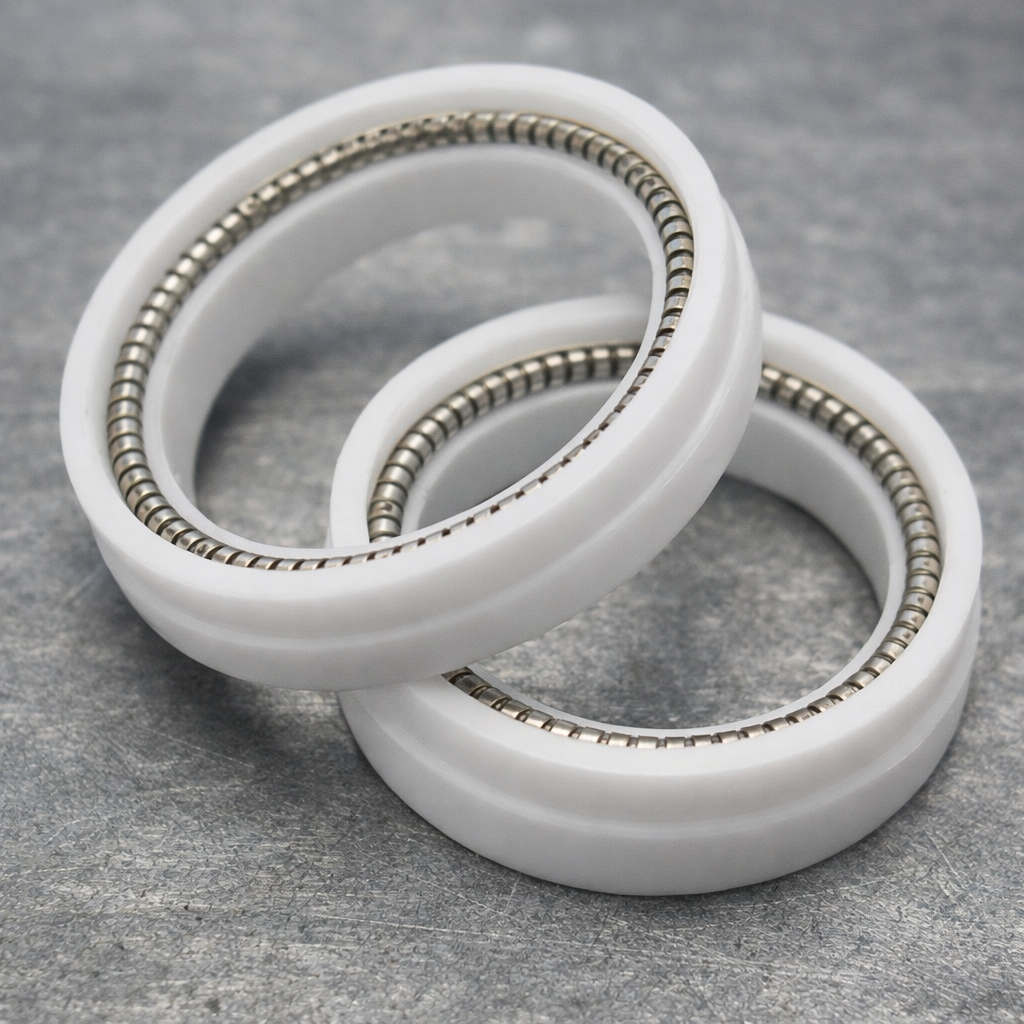
Why Select Spring-Energized Seals?
Conventional seals often lead to unexpected failures, driving up maintenance costs and risking system downtime in high stakes operations. Choose spring-energized seals for their proven advantages: unbeatable chemical resistance, ultra-low friction for extended service life and self-adjusting pressure that ensures zero leaks even under dynamic loads. They slash total ownership costs by minimizing replacements and boosting efficiency-delivering ROI through superior durability and compliance with stringent standards. For mission-critical applications, they are the smart choice for sustained performance and peace of mind.
Basic Design Elements of Spring-Energized Seals
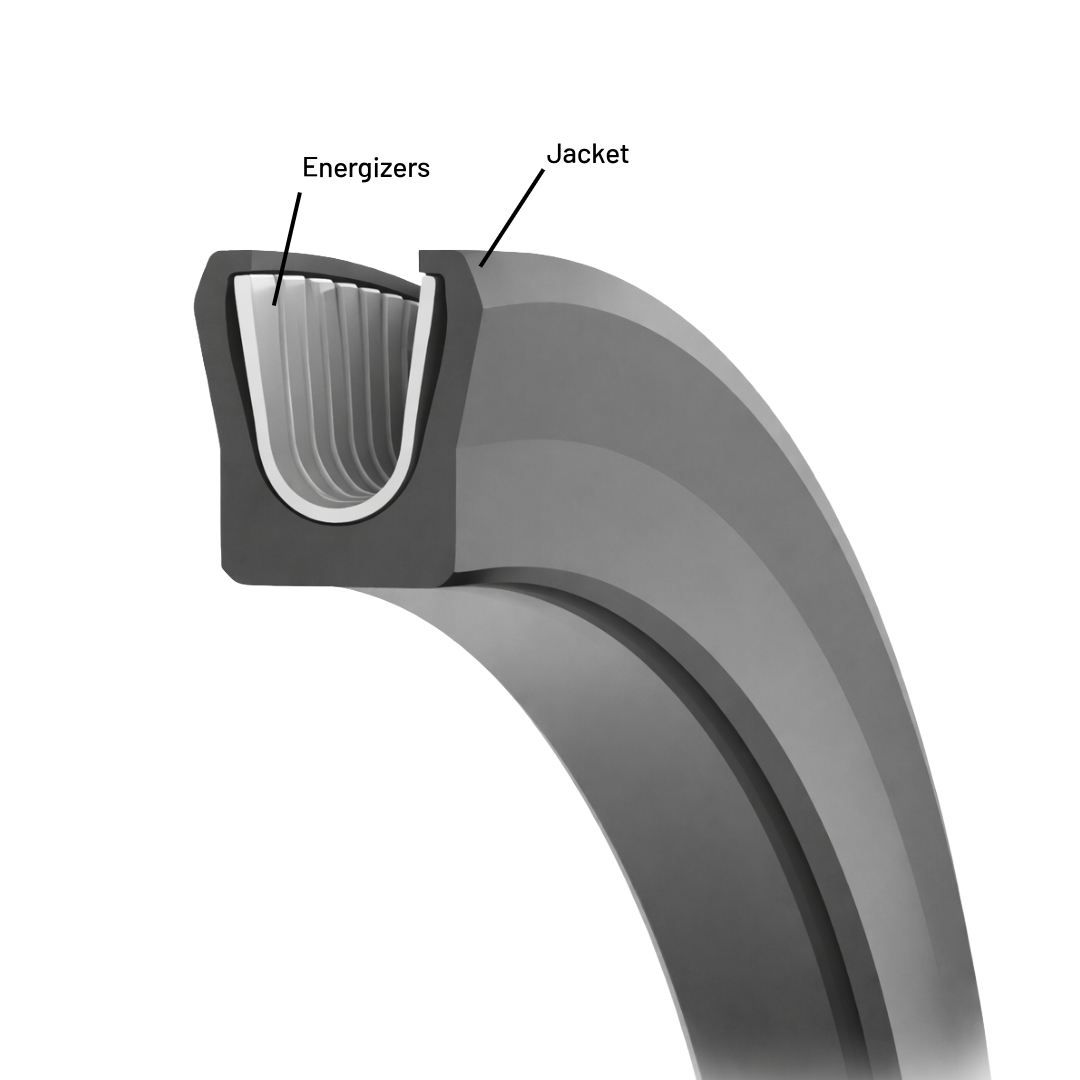
Spring-energized seals primarily operate as lip seals or U-cups, built from high-performance elastomers with polytetrafluoroethylene (PTFE) as the top choice for the resilient outer jacket. A corrosion resistant metal spring energizer reinforces this jacket, delivering steady force to the sealing lips for a reliable gas tight seal across all interfaces. These designs blend elastomeric and metallic principles, customized to exact needs through options like cantilever or V-spring profiles, ribbon or helical springs, U-shapes and specialized coil or pitch variants for peak efficiency.
Jackets: Fluoroplastics and engineered plastics suit spring jackets, but PTFE sets the standard with exceptional durability and extrusion resistance. Virgin PEEK excels in backup rings and high-heat settings, while UHMW-PE shines in dynamic applications facing heavy wear. PTFE compounds—filled, lubricated, modified or proprietary adapt seamlessly to diverse demands.
Energizer: Energizer selection depends on media chemistry and durability requirements, with stainless steels offering broad compatibility and premium alloys excelling in harsh environments: Canted Coil uses stainless (302, 316), MP35N, Elgiloy®, BeCu, Inconel®, Hastelloy® (with Au, Ag, Sn, Ni plating); Cantilever V Spring features stainless (301, 302, 304, 316, 17-7PH) or exotics like Inconel (600/718/X-750), Monel 400, Elgiloy (AMS5833/NACE), Hastelloy (C22/C276/C2000); Helical Spring mirrors these with added BeCu option.
Materials for Spring-Energized Seals
Jacket Materials
| Trade Name | Filler | Temp Range (°C) | Tensile (MPa) | Elongation (%) | Certifications |
|---|---|---|---|---|---|
| Novum P 01 | Virgin PTFE | -250°C to +250°C | 25 (Min) | 250 (Min) | API 6A (10% H₂S @ 200°C) |
| Novum M 03 | Modified PTFE | -150°C to +260°C | 25 (Min) | 300 (Min) | API 6A (10% H₂S @ 200°C) |
| Novum GF 01 | 15% Glass filled PTFE | -200°C to +260°C | 15 (Min) | 210 (Min) | API 6A (10% H₂S @ 200°C) |
| NOVUM GF 02 | 25% Glass Filled PTFE | -200°C to +260°C | 10 (Min) | 100 (Min) | - |
| NOVUM CF 02 | 25% Carbon filled PTFE | -200°C to +250°C | 10 (Min) | 80 (Min) | API 6A (10% H₂S @ 200°C) |
| NOVUM GC 01 | 10% Glass and 15% carbon filled PTFE | -200°C to +260°C | 10 (Min) | 100 (Min) | API 6A (10% H₂S @ 200°C) |
| NOVUM BF 01 | 40% Bronze filled PTFE | -150°C to +250°C | 14 (Min) | 160 (Min) | - |
| NOVUM CN 05 | 10% copper-nickel filled PTFE | -150°C to +260°C | 17 (Min) | 200 (Min) | - |
| Novum PK 01 | PEEK Thermoplastic | +250°C | 90 (Min) | 10 (Min) | - |
| Novum PKC 02 | 20% PTFE Reinforced PEEK Composite | +210°C | 53-57 (Min) | 40-50 (Min) | - |
| Novum PKC 03 | 30% Carbon Fiber Reinforced PEEK | +250°C | 125 (Min) | 2.5 | - |
| Novum PKC 04 | 10% PTFE, 10% CB, 10% GPH Reinforced PEEK | +250°C | 70 (Min) | 2.5 (Min) | - |
| Novum PKC 06 | 30% PTFE Reinforced PEEK | +210°C | 45-55 (Min) | 35-45 (Min) | - |
| Novum PCT 01 | Homopolymer of Chlorotrifluoroethylene | -200°C to +150°C | 30 (Min) | 100 (Min) | - |
Energizer Materials
| Spring Type | Stainless Grades | Exotic Alloys | Plating/Compliance |
|---|---|---|---|
| Canted Coil | 302, 316 | MP35N, Elgiloy®, BeCu, Inconel®, Hastelloy®, Platinum Iridium | Gold/Silver/Tin/Nickel |
| Cantilever V | 301, 302, 304, 316, 17-7PH | Inconel® (600/718/X-750), Monel® 400, Elgiloy® (AMS5833/NACE), Hastelloy® (C22/C276/C2000) | NACE MR0175 compliant |
| Helical | 301, 302, 304, 316, 17-7PH | Inconel® (600/718/X-750), Monel® 400, Elgiloy® (AMS5833/NACE), Hastelloy® (C22/C276/C2000), BeCu | NACE MR0175 compliant |
How Spring-Energized Seals Operate
Upon installation in the cavity, spring-energized seals undergo radial compression, activating the spring mechanism to force sealing lips against the gland walls and create an instant, leak-free seal. Inherent spring tension guarantees consistent performance from initial operation, independent of system pressure. Incoming pressure enhances jacket contact, supporting reliable functions across low- and high-pressure ranges.
They further counter extrusion under elevated temperatures and pressures – avoiding material nibbles or shears in cyclic service—while addressing gap sizes and surface velocities. Rectangular or triangular backup rings deliver proven safeguards in high-risk configurations.
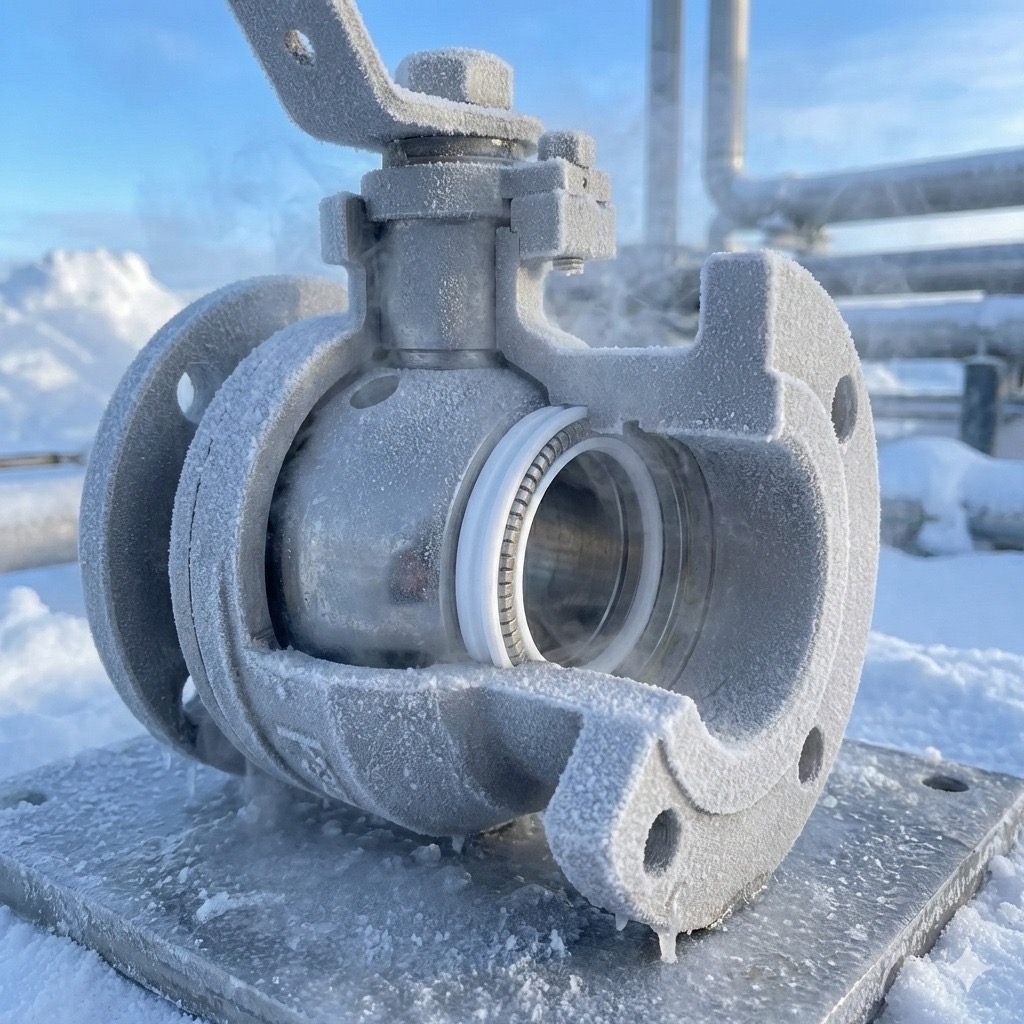
Require High-Performance Spring-Energized Seals?
Contact ISMAT for immediate technical consultation, application-specific compound development and production-ready seals optimized for your most critical oil & gas, chemical processing and heavy industrial sealing requirements.
Key Advantages of ISMAT Novum Spring-Energized Seals
1) Low Friction and Wide Temperature Range
ISMAT Novum seals offer ultra-low friction across -250°C to +260°C, supporting dynamic sealing from cryogenic LNG to high-heat steam systems. The advanced polymer jacket provides natural lubricity, cutting actuator energy use by 40-60% versus elastomers and preventing stick-slip in valves and pumps. Paired with the metal spring’s steady radial force, they ensure leak-free performance amid thermal shifts, wear or pressure cycles boosting MTBF and meeting API 6A sour service standards (10% H₂S at 200°C).
2) Longer Life and Lower Maintenance Costs
ISMAT Novum seals extend service life over traditional elastomers via proprietary polymer formulations and nonstop spring energization. The durable jacket withstands wear, chemicals and heat fatigue, while the metal spring auto-adjusts for material loss to sustain sealing force. This drives fewer failures, reduced downtime and lower total ownership costs in revenue-critical operations.
3) Outstanding Chemical Resistance
ISMAT Novum seals excel against solvents, acids, hydrocarbons and process fluids in chemical, refining, pharma and heavy industry settings. The robust polymer jacket holds integrity under extended exposure, with the corrosion-proof energizer maintaining radial force for long-term, zero-leak reliability where elastomers fall short.
Types of Spring Energized Seals Offered by ISMAT
ISMAT offers four primary spring configurations optimized for Novum PTFE spring-energized seals, each engineered for specific industrial sealing requirements:
1. V-Spring (Cantilever Spring)
High deflection capability with concentrated lip loading for reciprocating service. Optimized for subsea actuators, blowout preventers and valve applications requiring contamination exclusion and tolerance of stack-up accommodation.
2. Helical Coil Spring
Uniform force distribution for cryogenic valves, vacuum penetrations and low-cycle dynamic service requiring consistent sealing pressure across temperature extremes.
3. Garter Spring
Independent radial force unaffected by shaft length variation. Ideal for rotary equipment, downhole pumps and contaminated environments accommodating shaft runout and eccentricity.
4. slanted Coil Spring
Stable preload across varying compression and surface finishes for gate valve stems, dynamic actuators, high-cycle rotary service and misaligned offshore connections. Provides low break-out force with reliable sealing through gland tolerances.
ISMAT engineering team selects optimal spring geometry based on pressure differentials, motion characteristics, media compatibility and operational envelope to maximize seal reliability and service life across oil & gas, chemical processing and heavy industrial applications.
Why Choose ISMAT for Spring Energized Seals
ISMAT leads in high-performance spring-energized seals with Novum advanced polymer formulations, offering extreme chemical resistance, temperature stability from cryogenic to high-heat conditions and robust mechanical strength for heavy industries. Backed by decades of expertise, in-house compound development and 4,000+ production molds, we enable fast prototyping to high-volume runs. Our engineering support includes tailored spring designs (V-spring, C-spring, helical, garter, canted coil) and custom profiles matched to exact gland specs and operating needs. This delivers real business gains: longer MTBF, lower maintenance, full compliance and zero unplanned downtime making ISMAT your strategic partner for turning reliability into competitive edge in oil & gas, chemicals, power and heavy equipment worldwide.
Applications of Spring-Energized Seals




Trusted by Industry Leaders




Get In Touch
Contact ISMAT for Spring Energized Seals
ISMAT delivers precision-engineered spring energized seals optimized for your most demanding industrial applications.
Request engineering consultation, download Novum material specifications or submit gland dimensions for custom seal design, rapid prototyping and production-scale delivery that ensures maximum equipment reliability and minimum process downtime.
FAQs
ISMAT Novum seals operate reliably from -250°C to +260°C, covering cryogenic LNG applications through high-temperature steam service while maintaining consistent sealing performance.
ISMAT provides V-spring, C-spring, helical coil, garter and canted coil configurations, each optimized for specific motion characteristics, pressure differentials and contamination resistance requirements.
Yes, all Novum Series material grades demonstrate exceptional resistance to sour gas, acids, hydrocarbons and aggressive process media, ensuring reliable performance in chemically demanding environments.
ISMAT seals excel in oil & gas, chemical processing, power generation, pharmaceuticals and heavy equipment manufacturing where extended service life and zero-leak performance are mission-critical.